


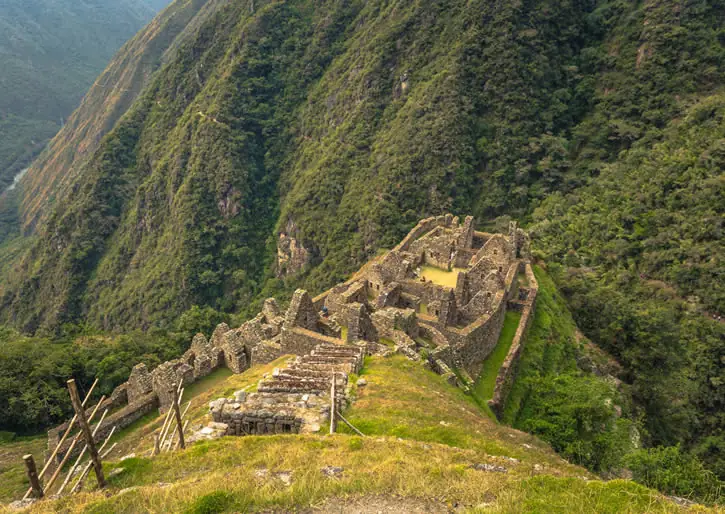
Wiñay Wayna, whose name translates to “Forever Young” in Quechua, is one of the most intriguing sites along the Inca Trail—yet it often receives far less recognition than it deserves. This remarkable archaeological complex sits at the edge of the cloud forest, perched above the Urubamba River, and combines intricate Inca engineering with breathtaking landscapes.
Although overshadowed by Machu Picchu, many hikers consider Wiñay Wayna the emotional highlight of the trek because of its peaceful atmosphere, elegant stonework, and spectacular agricultural terraces.
A Brief Historical Overview
Archaeologists believe Wiñay Wayna was built during the later period of the Inca Empire, although its exact origins remain uncertain. The site likely served multiple purposes: an agricultural hub, a spiritual center, and a resting point for travelers moving along the Qhapaq Ñan network toward Machu Picchu.
The complex is laid out in a way that reflects the Inca worldview, with terraces symbolizing the connection between humans, nature, and the sacred mountains.
Architectural Features
Terraces
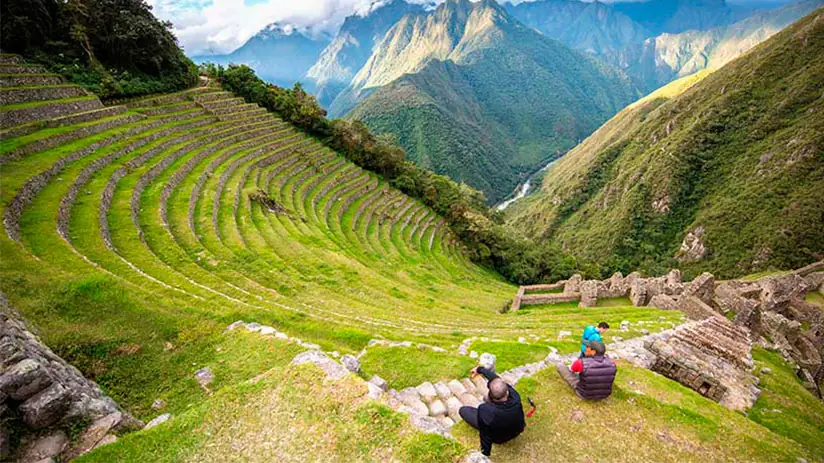
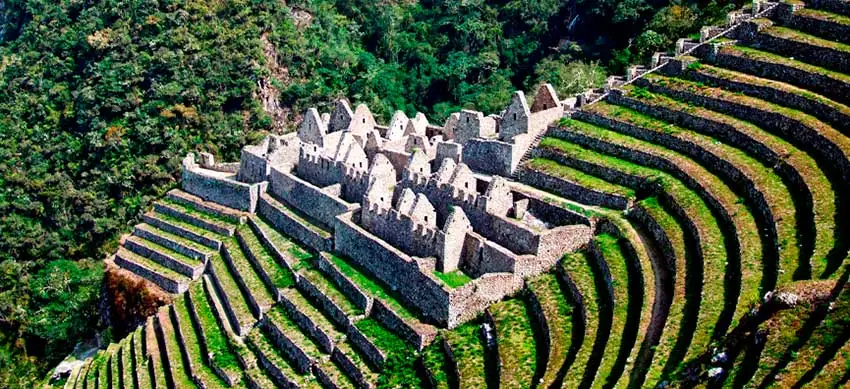
The most striking feature of Wiñay Wayna is its sweeping set of agricultural terraces carved into the mountainside. Unlike the terraces at Machu Picchu, which tend to be straighter and more uniform, these terraces curve with the shape of the hill, creating a dramatic amphitheater-like effect.
Water System
A sophisticated system of fountains and channels flows through the upper part of the site. These stone-carved waterways still function today, fed by springs higher up in the mountains. Many researchers believe they were used in ritual cleansing ceremonies.
Upper and Lower Sectors
Wiñay Wayna consists of two main architectural clusters connected by stairways:
- The lower sector contains a series of houses and storage buildings.
- The upper sector holds ceremonial structures, plazas, and ritual fountains.
Their layout reflects classic Inca design principles, including trapezoidal doorways and precisely cut stone.
The Natural Setting
Wiñay Wayna lies in the transition zone between high Andean terrain and dense cloud forest. Hikers often spot colorful orchids, moss-covered stones, butterflies, and various species of birds, especially hummingbirds that thrive in this humid environment. This lush ecosystem adds a peaceful and almost mystical quality to the site.
Trekking to Wiñay Wayna
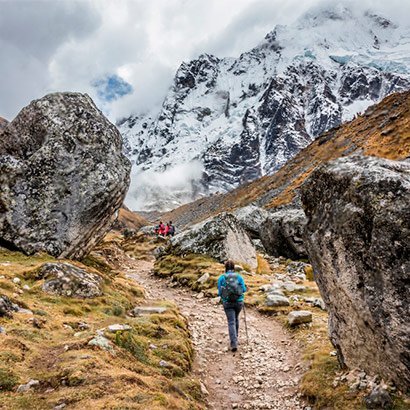
Most people reach Wiñay Wayna on the third day of the classic four-day Inca Trail. It is usually the final major archaeological stop before the trail continues toward Inti Punku, the Sun Gate, and Machu Picchu.
The ascent involves steep stone staircases, but the effort is rewarded with expansive views and an unforgettable sense of stepping into a piece of living history.
Practical Tips for Visiting
- Start early to enjoy the site with fewer visitors.
- Bring trekking poles (with rubber tips) for the steep steps.
- Watch your footing, especially during the rainy season when the stones can be slippery.
- Take time to explore, as the site is more extensive than it appears from afar.
- Respect the ruins by staying on marked paths and avoiding areas closed for conservation.

Why Wiñay Wayna Is the Inca Trail’s Hidden Gem
While Machu Picchu is the star of the trek, Wiñay Wayna offers something different: tranquility, stunning architecture without large crowds, and one of the best-preserved examples of Inca agricultural design. Many hikers describe it as the most intimate moment of their journey—a place where history feels alive and nature seems to embrace the ruins.
The combination of engineering brilliance, natural beauty, and spiritual atmosphere makes Wiñay Wayna one of the most rewarding stops on the Inca Trail.


òîâàðû äëÿ äîìà ìàãàçèí ôèêñèðîâàííûõ öåí [url=https://www.oneprice.shop/]https://oneprice.shop/[/url]
https://www.triathlon.org/?URL=oneprice.shop